Switzerland – another travel blog:
Updated: Dec 22, 2025

Who is the President of Switzerland? I think I could ask that question of a hundred people or even more and no one would know the answer. Why, you may ask? Most people know who the President of the US is, and of Russia, China, France and so on. People will even know the leaders of smaller nations. But in all my life, I have never heard any mention of Switzerland in a political sense, other than as the headquarters of the United Nations and many other world agencies or organisations. It seems to be the place people go to if they need somewhere completely neutral and safe.
For the record, the current President of Switzerland is a woman called Viola Amherd. She will hold office for one year and will then be succeeded by one of the other seven members of the federal council, who elected her and who effectively govern the country. They will then elect another member who will hold office for another year and so on. The reins of power will be transferred smoothly and seamlessly. Switzerland is a democracy with twenty six cantons or states, which are largely self-governing. The country has a federal system but the President is not elected directly. The current system of government has been in place in an unbroken sequence since 1848. So it obviously works. The federal council only makes decisions by consensus so the system favours co-operation over competition. Switzerland hasn’t had any wars on its territory for almost 500 years. Crime is rare and the country has continuously been voted the safest place to live on earth. Some people will say that the Swiss are dull and boring but in all of my visits I have never found this – a bit conservative maybe but always friendly and helpful.

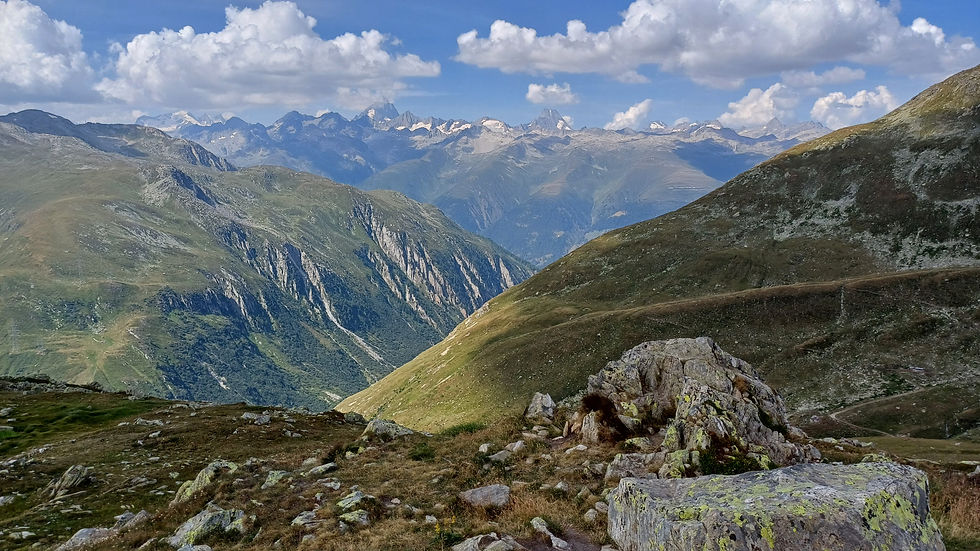
I have been coming here for over forty years and it is one of my favourite, if not my top travel destination. The fact that everything works and travel is so easy because transport systems are so efficient is only a small part of the answer. The overwhelming reason is that the country has the most beautiful, breathtaking scenery I have ever encountered, and I use that much abused word advisedly. Because it is situated bang in the middle of the Alps, everywhere you go in Switzerland you encounter fabulous mountains, lakes, rivers, waterfalls, forests, green spaces, unique buildings, towns and villages and that is only the start.
But let us return to the macro political situation for a moment. Have the Swiss got it right? They would seem to have. Add in the fact that there are four main ethnic groups in the country; Germans, French, Italians and Romansch. Everything has to be done in four languages but it doesn’t seem to have any impact on how smoothly the country runs. Now while I love visiting the place, there is one small pebble grating under the Swiss door: Many people will claim that the reason they have been at peace for 500 years is because other warring nations which surround them have not invaded. There is a theory that the country is so mountainous and difficult to navigate that invasion is impossible but the more popular theory is that other countries have left the Swiss alone because they have all needed a neutral country in which to keep their ill-gotten gains.

It is true that Switzerland is the largest centre of world banking and it is rumoured that while the vast amounts of money and valuables stored there are legitimate, that there is quite a large amount of illegitimate wealth also stored there. Specifically, treasures stolen by the Nazis are said to have been lodged there over eighty years ago and still remain untouched. Given that those who lodged them are long since dead, it is unlikely that they will ever be claimed. Similarly, it is said that there is more Russian wealth in Switzerland than back home in Russia. Again, I’m not saying that any of this is illegal but the many criminal organisations that exist also need somewhere to safeguard their wealth. So, is it possible that the Swiss have been allowed to exist in peace provided they provide ‘services’ to the rest of the world? Whether this is so or not, one cannot argue with the way they have developed a seemingly utopian system of government which is fair and democratic and seemingly takes care of every strand of society.

So, let’s not knock the country – let’s enjoy it because there is so much to see and savour. Starting with infrastructure, the road system is superb and well laid out. Public transport is outstanding with trains going literally everywhere. As far as I can see, there is no place in the country which you cannot reach by rail and this includes the very high mountains. Trains are expensive but incredibly efficient and timely. Buses are a little cheaper and no less efficient. Speaking of cost, there is no question that the country is expensive; possibly the dearest in Europe along with Norway but it is not prohibitively so. You can have a good holiday here on a budget as hotels are generally reasonably priced and you will find many low and mid-priced restaurants along with more pricey ones. I guess it depends on where you are coming from – in our case, being from Ireland, we didn’t notice a huge difference in the prices of most things.
On many previous visits to Switzerland, I had started in either Zurich in the north east or come through Milan from the Italian side. This time we flew to Geneva and spent a night there. We then drove along Lake Geneva through Lausanne to the Interlaken region. We spent a few days on the glorious Lake Brienz and also visited Lakes Thun, Oeschinen and Fallboden. These are four of the most beautiful lakes in the world and are all within thirty kilometres of each other. We visited Gimmelwald, Rosenlaui, Iseltwald and Lungern, all small beautiful villages. We did Lauterbrunnen with its seventy two waterfalls but the undoubted highlight of this part of the country is the train ride to what they call ‘the top of Europe,’ the four and a half thousand metre Jungfraujoch mountain. Approached via the beautiful town of Grindelwald and situated next door to the possibly better known Eiger, Jungfrau has a railway that goes right to the top of the mountain and has the highest railway station in Europe. It was built by a Swiss industrialist in the 19th Century, who having visited the peak, thought it would be a nice idea if everyone, regardless of their ability or mobility, could see the Jungfrau. So, incredibly, he built a railway to the top.
From here, we visited the beautiful city of Lucerne and then headed east for a long drive to St Moritz. The scenery here is literally out-of-this-world. To approach St Moritz, which is situated at three thousand metres, there are three separate mountain passes you can take. The most common one is the Julier from Zurich direction. Now while the views on this drive are awesome, if you take either the Bernina or Maloja passes, the views are even better. We did all three over a few days and we were constantly stopping to take photos or just to admire the sheer magnificence of nature.

Our next destination was Lugano/Locarno/Como, so we took a long slow drive across the Maloja which brings you through part of Italy before coming back into Switzerland beyond Como. This part of the country is different and has its own unique Italian attributes. Apart from the major centres and lakes, we visited the small towns of Morcote and Ascona, also well worth seeing.
To conclude, we had to see the Matterhorn so we went to Zermatt. Now beware, this large village is situated half way up a mountain and you cannot drive there. You must park your car and approach it by train. Getting around thereafter is not difficult as there are numerous small electric buggies which provide a taxi service. And the Matterhorn is magnificent – while it can of course be seen from Zermatt, do brave the cable car to get closer. It’s a pretty wild ride, particularly on a windy day but well worth it and of course, like everything else in Switzerland, completely safe.

If my blog sounds like an advertisement the Swiss tourist board might put out, I make no apology. The country is magnificent and sells itself. Of course I have left out an enormous number of places that we didn’t visit on this trip. I won’t go through them all but Rheinfall, San Bernardino, Bellinzona and Diavolezza are well worth visiting. The only thing that Switzerland lacks is a coastline, but it has so many lakes and rivers and other water features that you won’t notice. I unhesitatingly recommend it.


Comments