Micheal O'Muircheartaigh - The Passing of a Legend:
Updated: Dec 18, 2025

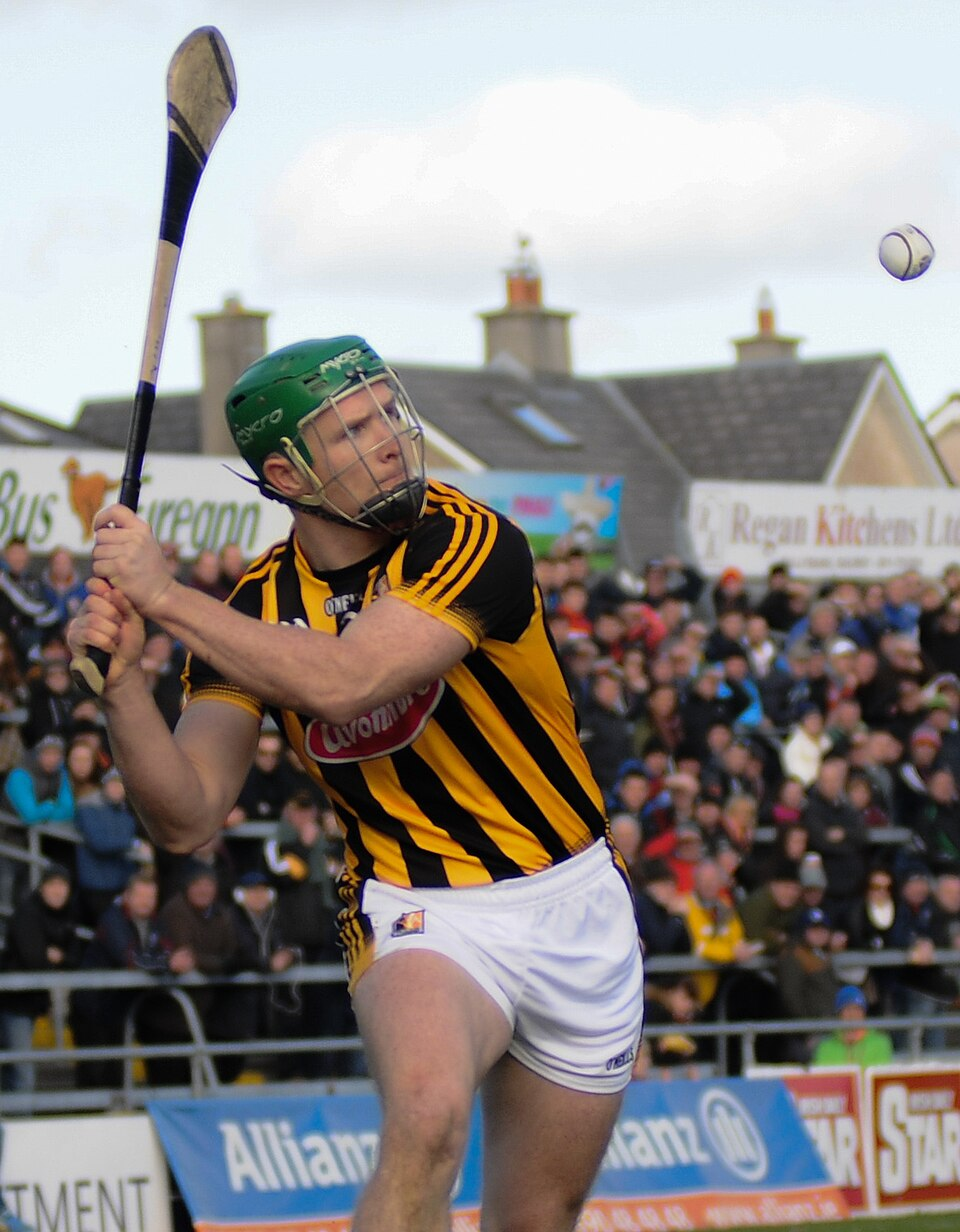
When you consider the icons of the GAA, the names that immediately come to mind would be Christy Ring, Mick Mackey, Eddie Keher, John Doyle, DJ Carey and Henry Shefflin in hurling; Mick O’Connell, Mick O’Dwyer, Kevin Heffernan and Sean Purcell in football. There are also many more modern-day great players who will in time take their place in the pantheon.
But did any of them do as much as Micheal O’Muirecheartaigh to publicize and popularize gaelic games? I’m not sure, but when it comes to listing GAA greats, I believe we should include not just players but other people who have played a major part in our games history. Obviously, you would include on that list, Micheal’s predecessor and contemporary, Micheal O’Hehir. Both of these men were the soundtrack to my youth. Sunday after Sunday, they brought us the excitement and action from GAA fields throughout the country. Their vivid commentaries made us feel like we were almost there at the games. Long before TV ever showed live games, we were treated to meticulously researched and expertly described live commentaries. Even when TV began to show major finals and semi-finals, many people (including me) recall that they would switch off the sound on their TV’s and listen to Micheal’s radio commentary. Micheal O’Hehir eventually did TV commentaries but Micheal O’Muirecheartaigh preferred to stick with radio. He then seemed to move to another level and he became the doyen of commentators; if Micheal wasn’t doing a game, you were disappointed; if he was, you knew it would be exciting. I wouldn’t have much interest in Gaelic Football but when Micheal was commentating, I would listen intently. His commentaries were always delivered with accuracy, speckled with anecdotes and touches of humour. He also never failed to add the ‘cupla focal.’ For non Irish readers, that means ‘a few words’ in the Irish language. Micheal was a native of the Kerry Gaeltacht and he never forgot or neglected his roots. His love of the Irish language was clear to see and he did more than his share to promote it.
When often asked how his commentaries were so vivid and so descriptive, his reply was always: ‘tis relatively simple – I describe what I see.’ The sheer modesty of the man – what he did not say was that he knew almost every player in the country and probably their seed, breed and generation so he was really talking about his friends and after that, it was second nature for him to describe the play.
People will have their favourite stars in every club and county and in every sport but when it comes to GAA, one name will be common to all and that of course is Micheal. In terms of knowledge, scale and longevity, there are very few whom he can be compared with. A few spring to mind - Peter O'Sullevan, the great BBC racing commentator, Murray Walker, the Formula One commentator, and obviously Micheal O’Hehir. There are probably a few others but very few people who were absolutely entrenched in their sport, fanatical about their sport, knew every single aspect of it and knew all of the people who participated in it by first name and could talk to any of them as a good friend.
I met Micheal once. I guess that’s no claim to fame as I’m sure half the country could say the same thing. It was at a charity dinner for a very good cause; people will be familiar with the format – Micheal was interviewed by Clare Mac Namara from RTE about his life and times with particular emphasis on his sporting memories.
The interview was the after dinner entertainment and was, I think, scheduled to last about 45 minutes. Needless to say, it went on way longer than that as Micheal, who of course was appearing for free, loved talking and would have gone on all night if it had been possible. The chat was highly entertaining and was thoroughly enjoyed by all. It was early in 2012 and as Dublin had just won the football All Ireland for the first time in many years, it also featured Alan and Bernard Brogan, both of whom Micheal knew well and the banter between them was highly entertaining.
After the interview, most people lingered for a drink but we assumed that was the conclusion of the evening’s entertainment. How wrong we were. Micheal proceeded to go round to every table and chatted freely with everyone. I had heard that he was incredibly generous with his time but this was above and beyond. He stayed until a very late hour and was careful not leave anybody out who wished to meet him. He posed for photographs with everyone and appeared to have all the time in the world. We learned later that he was due to fly to the US the following morning for a similar function, also for free, but he showed no urgency to leave or not the slightest bit of worry about his schedule for the following day.
As he approached the table I was sitting at, he saw my nameplate and said, ‘I’d say you’re a Wexford man?’ When I replied that I was from Kilkenny, he sat down and we got into a discussion about hurling and hurling greats – people that he had seen, met and commentated on. His knowledge was encyclopedic and he entertained us with stories and anecdotes long into the night. I mentioned a couple of times that I didn’t want to delay him but he brushed it off and told us that this was what he loved; meeting people from all parts of the country and all walks of life and chatting with them.
Micheal published an autobiography some years ago called ‘from Dun Sion to Croke Park,’ which I would highly recommend. He also published another book on his life and times with greater emphasis on sporting memories. His life is well documented so there is no need for me to go into any further detail, although I should mention that he spent his retirement touring the country and the world appearing at any function or occasion to which he was asked; in all the years, he never asked for a penny for appearance fees or even expenses. He would say, ‘tis better to leave it with the club or the charity’ or whatever. Two other things spring to mind. Firstly, he was probably the ultimate ‘people person,’ long before the term became fashionable. Des Cahill described him as a disaster to go anywhere with because you would never get home as Micheal would keep finding more people to chat to. Secondly, he had a saying himself which he often used to get his children up in the morning. He never needed much sleep himself and he regarded sleep as a sort of waste of valuable time. He would say, ‘get up, you’ve enough slept, you can have plenty of sleep when you’re dead.’
So, to, in my opinion, the greatest icon of the GAA, the consummate professional and the ultimate people person, you can sleep easy now dear friend.

Comments