Algeria: Definitely a Different Destination
- Dec 10, 2025
- 8 min read
Updated: Dec 23, 2025

I’ve thought long and hard about how to start this travel blog because I don’t want to put people off the country at the outset. Firstly, perspective — Algeria is a huge country, the ninth largest on earth, almost one and a half times the size of Western Europe, so it’s not a place you’ll explore in a weekend. I was there for a week and I managed to see quite a bit of it — eventually. The explanation for the qualification comes in my overall recommendation that if you are visiting Algeria, you are probably best advised to do it through a guided tour operator. Why? Well, my modus operandi is always to book a flight, a hire car and a hotel for the first night. After that, I explore and book as I go. Unfortunately, when I arrived in Algiers recently, the car hire firm didn’t show up. There was no alternative as there are only two operators and the other one was also closed; none of the big multi-nationals like Avis or Hertz operate there, but more about that later.

Next on the list was my hotel, so I hired a taxi and headed there. It was now 01.30 in the morning. Imagine my consternation when I was informed that my hotel reservation had been cancelled. The receptionist explained that ‘they had tried to obtain payment in advance from my credit card,’ but it had been rejected. Too right it had. You cannot charge a credit card without the owner’s permission. The hotel had been reserved through booking.com but no amount of arguing could convince them. There was no room at the inn. Luckily, I had retained my taxi driver who spoke good English and was very helpful. He then drove me to ten different hotels before we found one with a vacant room. So, to summarize, not everything works well in Algeria all the time.
Now, apart from that, everything else ran smoothly, starting with my car hire man, who called me early the following morning, offering profuse apologies for not showing up. He delivered the car to the hotel, gave me an upgrade and refused to take a penny in payment. He explained that because he had let me down the previous evening, he was honour bound to provide the car free for the week. Interestingly, the car had been the most expensive thing I had booked, at E200 for the week, so I saved a significant part of the cost of the holiday.
So, observations on Algeria — it is classed as a mid-range country by most ratings agencies, with a high GDP and good standard of living. I can’t say people were wealthy but there appeared to be plenty of money around and I didn’t see any poverty. It has enormous reserves of oil, gas and mineral wealth and is largely independent in terms of resources. I mentioned that the big car hire firms don’t operate here; neither will you find McDonalds, KFC or Burger King. You won’t find Starbucks either or absolutely none of the ubiquitous western brands you encounter almost everywhere. They even have their own range of ice creams, chocolates and mobile phone companies. In fact, due to laws in relation to business ownership, everything is native Algerian. For me, it was a nice change and the country runs just as well with its own indigenous brands and products. For someone who likes to explore by car, the huge bonus is that petrol is 0.32 cent per litre, apparently the fourth cheapest in the world. With transport so inexpensive, it was no surprise to see huge numbers of cars, mostly modern, but also unfortunately traffic jams in the bigger cities. Roads are generally excellent and resources have been invested in all infrastructure. Motorways are well serviced and always include a good restaurant. The only negative was the number of police or military checks, which tended to cause traffic jams on the approaches and exits of all towns and cities. I have no idea what they were checking for but none ever stopped me.
Algerian people are very friendly, open and welcoming. They don’t get that many tourists as one must apply for a visa, which takes about a week to issue. Many countries still have this stipulation so it isn’t a major issue but in Algeria’s case, their neighbours Morocco don’t require one so they receive far more visitors. So, if you do travel there, you may be something of a curiosity for the locals. In the week I was there, I can’t recall encountering anyone who wasn’t Algerian. I received great customer service. On one occasion, I walked into a shop and began browsing. The owner was engaged in conversation with a young girl but both immediately stopped and started to chat to me – not in an aggressive way or not trying to sell me anything. I assumed that the girl was related to the shop owner but she assured me she was just a customer but both treasured the chance to practice their English.

Because of the French occupation of the country for almost 150 years, there is still a strong influence. The buildings have a distinct French style and almost everyone can speak French. That said, they are no Francophiles and are glad to be free of colonialism. They were happy to speak English to me and interested in my background. The people are a combination of Arabic and Berber and of course speak both of those languages so most are multi-lingual.
Food is very similar to standard European fare, probably closest to French. Many restaurants go with the African practice of allowing diners to select their own cut of meat or fish from a display. Perhaps not to everyone’s taste but it ensures the food is fresh and tasty. No fast food joints here but there’s no need because life seems to move at a slower pace. One thing to note, if you fancy a glass of wine with your meal, you may have to do a bit of searching. Alcohol is not common as Algeria is a Muslim country and many places don’t serve it at all. I did manage to find a restaurant with wine most nights though and, surprisingly, you can get a very good Algerian wine at a reasonable price. On average, I paid about twenty euro for dinner. If you have wine, add another fifteen.
Booking your hotel is not as straightforward as in other countries. I already mentioned the debacle of having my reservation cancelled. I did manage to book hotels in some places through the internet but in others, I was given the message, ‘all accommodation full.’ It wasn’t, it was just that many hotels don’t use the international booking agencies. I got around that by asking the hotel I was staying in to recommend and book a hotel at my next destination. Prices averaged about fifty euro per night including breakfast.

Regarding the pace of life, Algeria may move slowly but is not inefficient; things get done in a quietly effective way. But there doesn’t appear to be the same rush or level of stress in daily life. This is reflected in the way people drive in cities. In contrast to their neighbours Morocco or Egypt, where everyone seems to drive at ninety miles an hour and crossing the road is a health hazard, the opposite pertains here. Pedestrians wander across the road at will and motorists always slow and yield to them. It took me a couple of days to get used to it, both as a motorist and a pedestrian. Small children fearlessly run across the road and you have to be ever vigilant but I liked the culture of sharing the road that it has engendered.
The main centre of the capital, Algiers, is the Casbah, a universal open air market which is a UNESCO World Heritage site. Apart from this, which has a distinctly Arabic feel, the city appears to be dominated by large old style French architecture.
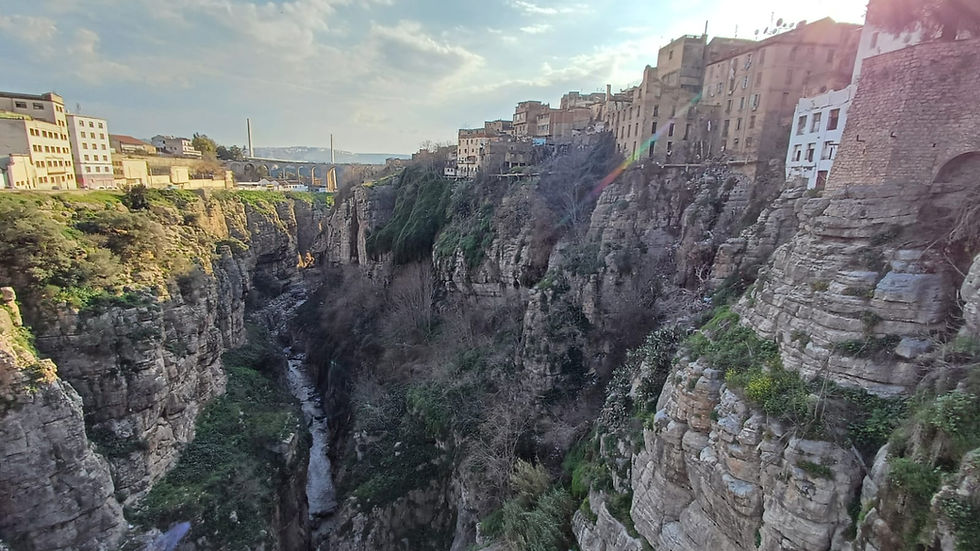
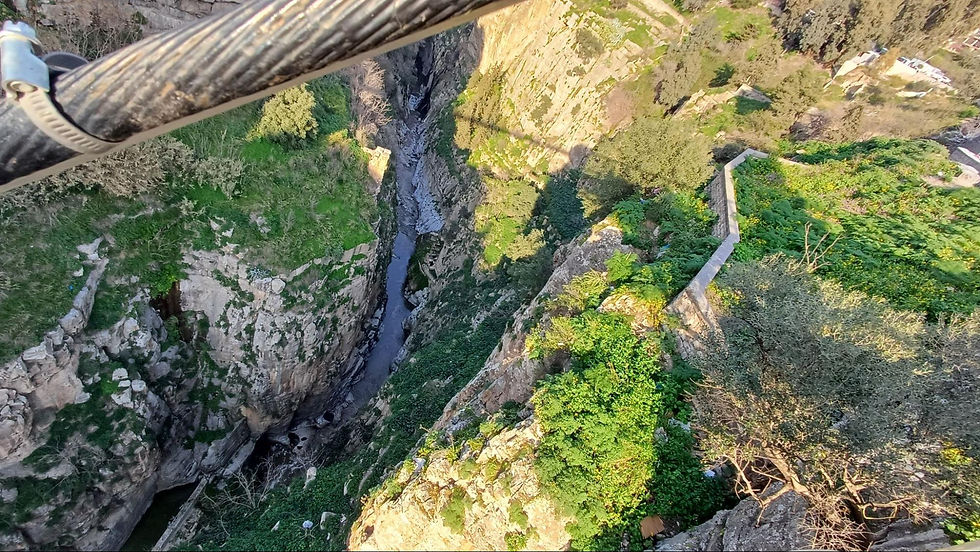
The city of Constantine is about 300 kilometres from the capital and is reached by a pleasant drive through the Atlas Mountains. It is situated on either side of a massive canyon. It dates back to Roman times and is well worth seeing. There are also numerous old roman towns in the vicinity. The Kabylie region, to the north of here, is known as the cultural capital of the country and its principal city, Tizi Ouzou, is also a must see. Situated in the midst of the Atlas Mountains, it is a picturesque and vibrant place.
I visited the famous Spanish fortress of Santa Cruz, near the city of Oran, in the west of the country and it is most impressive. I knew that the French ruled Algeria from 1835 to 1962 but I had not been aware that the Spanish had been there for 300 years before that. No wonder the Algerians don’t like colonists. Nonetheless, the fortress, which took sixty years to build, is most impressive and well worth a visit. A large part of Algeria is the Sahara Desert. As I had already seen it in Morocco and as the drive was prohibitive, I didn’t drive south and stayed largely in the northern region which parallels the Mediterranean.
There is an expression that says you learn something new every day. I certainly did in Algeria. As I toured the country, something was bugging me; there was something missing but I couldn’t put my finger on it. It eventually came to me — there were no dogs, not one. When I asked why, I was told that the Islamic religion does not allow people to keep pets. Despite having visited numerous Muslim countries, I had not been aware of this. I did notice some cats and while all looked well cared for, I’m not sure anyone actually owned them (of course cat people will tell you that you never own a cat — it owns you). On a positive note, a very pleasant cultural difference I noticed was that there was no pressure on people to dress in Islamic fashion. This is despite the population being 99% Muslim. Some women wear the traditional veil but many do not and there seemed to be a harmony between those who do and those who don’t and an understanding that people are free to do as they please.

I also found people to be scrupulously honest. Several times I mistook the exchange rate and almost paid too much but on each occasion I was politely informed that I had tendered too much cash and had most of it returned. The best example was the morning I was climbing one of the Atlas Mountains. It was hot and I was sweating profusely when about half way up I encountered two small boys, probably no more than eight years old, selling ice-cold bottles of water. I immediately asked for one and paid with a coin. The little boy didn’t have the correct change but I waved him away as it was less than a euro. The water refreshed me and I made it to the top. About an hour later when I was making my way back down, amazingly, the little boy ran to me and offered me my change. I was touched but insisted he keep it and I gave him a tip for being so honest. I would have to say that his behaviour reflected that of all the people I encountered.
So, would I recommend a visit? Well, if you would like a place where everyone is welcoming, friendly and helpful, is relatively inexpensive and safe, has its own culture and has none of the global brands, you’ll love Algeria. While I made it solo, there were a few bumps in the road so it’s probably best to use a tour company. You will enjoy it though.


Comments